
Real Estate Investing Articles

The 2026 Real Estate Investor’s Playbook: Opportunities, Risks, and Strategic Positioning
I. Executive Summary In 2026, the real estate landscape is set to undergo a reshaping that offers great opportunity to investors. After several years of post-pandemic volatility, tightening monetary policy, and uneven sector performance, the…

Building Generational Wealth Through Real Estate
Key Takeaways Real estate builds wealth through four simultaneous mechanisms: rental cash flow, mortgage principal pay-down (tenant-funded), property appreciation, and tax efficiency — all compounding concurrently over timeLeverage amplifies returns on equity but must be…

Rental Property vs Real Estate Funds: Which Should You Choose?
Key Takeaways Rental properties and real estate funds are backed by the same underlying assets but deliver fundamentally different investor experiences — control, liquidity, and risk diverge at the structural level, not at the margins.…
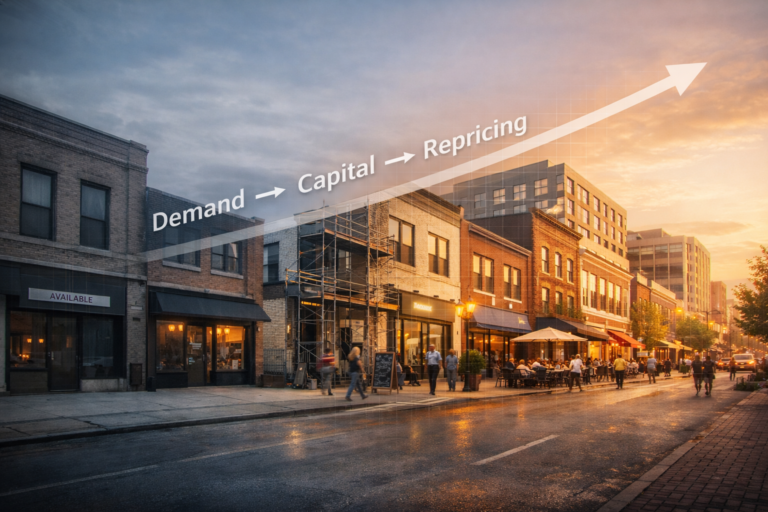
Community Revitalization as an Investment Thesis
Key Takeaways Community revitalization is a timing-based pricing inefficiency — not a social initiative. Returns come from entering before demand formation is reflected in asset prices. Asset values increase from two sources: income growth from…

Why Is Institutional Capital Overlooking Tier-2 Sun Belt Cities?
Key Takeaways Tier-2 Sun Belt metros — cities like Huntsville, Greenville, and Chattanooga — show durable population and employment growth, yet remain structurally underweighted in institutional real estate portfolios. The underallocation is not a data…

Why Private Real Estate? Returns, Income & Diversification
Key Takeaways Private real estate investments have historically delivered competitive long-term returns with lower reported volatility than public REITs over certain multi-decade periods, e.g., 2000–2020. It has demonstrated low correlation to public equities and bonds,…

Understanding the Real Estate Capital Stack
Key Takeaways The real estate capital stack is a priority hierarchy of four layers — senior debt, mezzanine debt, preferred equity, and common equity — determining who gets paid first, who absorbs losses first, and…